Payment Forms
A payment form collects money as part of a form submission: registration fees, event tickets, course deposits, donations, or a top-up of the client's account. The client fills in the form, picks or enters an amount, and pays online before the submission completes. You can offer several price options in one form.
Before you start
- Payment forms need both CRM Suite and Sales. Without Sales, the payment section shows a lock and clients cannot pay on the form.
- Connect a payment gateway (for example Stripe, Razorpay or MyFatoorah) in Settings > Payment Gateways so clients can pay online.
Add a payment section
- Open Engage > Forms & Flows and create or open a web form. Templates in the payments category already include a payment section.
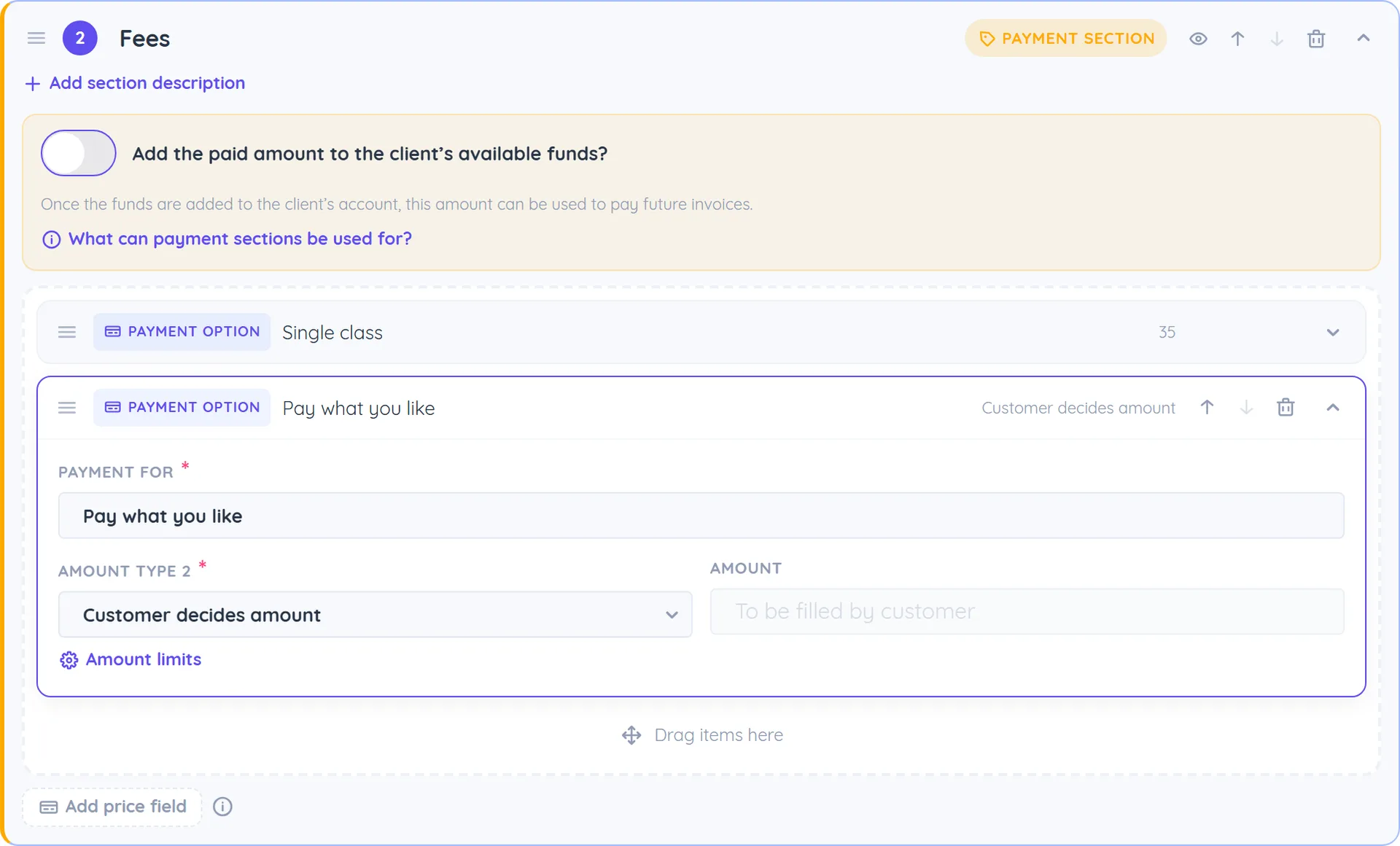
- From Add fields > Sections, drag Payment section into the form (or click Add payment section). A form can have one payment section.
- Enter Payment for, the purpose shown to the client, such as "Workshop registration".
- Set the first price field's Amount type:
- Fixed amount: enter the amount the client pays.
- Customer decides amount: the client enters the amount. Open Amount limits to set a Minimum amount, Maximum amount and Recommended amount.
- Click Add price field to offer more options, for example "Single class" and "5-class pass". The client picks one.
- Turn on Add the paid amount to the client's available funds? if the payment is a top-up. The amount can then pay future invoices.
- Click Save, then Preview to try it.
What the client sees
The client fills in the form, picks or enters an amount in the payment section, clicks Submit and is taken to the payment page. The response is complete once the payment succeeds.
Track payments
- On the form's responses page, the Amount and Status columns show what each client paid.
- On the client's Forms tab, the payment status shows next to the form status.
- Use the automation trigger When a Form is paid by a Client to send a receipt, tag the client or notify your team. See Form automations.