Roles and Permissions
Every team member has one role, which sets what they can see and do. On top of the role, owners and administrators can tick granular access options to hide more from one person, for example to stop a receptionist from seeing reports or to hide phone numbers.
What a team member can use also depends on your plan. A role never unlocks a module that is not in your plan. See Plan Modules.
Roles
Choose the role in User Access Role when you add or edit a team member.
| Role | Best for | Can use | Cannot use |
|---|---|---|---|
| Owner | The account owner | Everything, including Deactivate Workspace and Delete Account | Nothing is hidden |
| Administrator | Managers who run the account | Everything the owner can, including team members, subscription, integrations, all settings and reports | Deactivating a workspace and deleting the account |
| Practitioner/Staff | Team members who serve clients and take bookings | Overview, Inbox, Appointments, Clients, Engage, Catalogue, Finance, everyday settings, their own profile and availability | Reports, Team member management, account and business settings, subscription, integrations |
| Receptionist | Front desk | The same areas as Practitioner/Staff | Reports, account settings; cannot take bookings themselves |
| Scheduler | Booking coordinators | Overview, Inbox, Appointments, Clients, Contacts, their profile and availability | Finance, Catalogue, Reports, broadcasts and automations; cannot take bookings themselves |
| Accountant/Finance Manager | Bookkeepers and finance staff | Overview, Catalogue, Finance and Reports | Inbox and Engage, Clients; cannot take bookings themselves |
On the Overview dashboard, team members with the Practitioner/Staff role see My bookings today and My classes today: only their own bookings and classes.
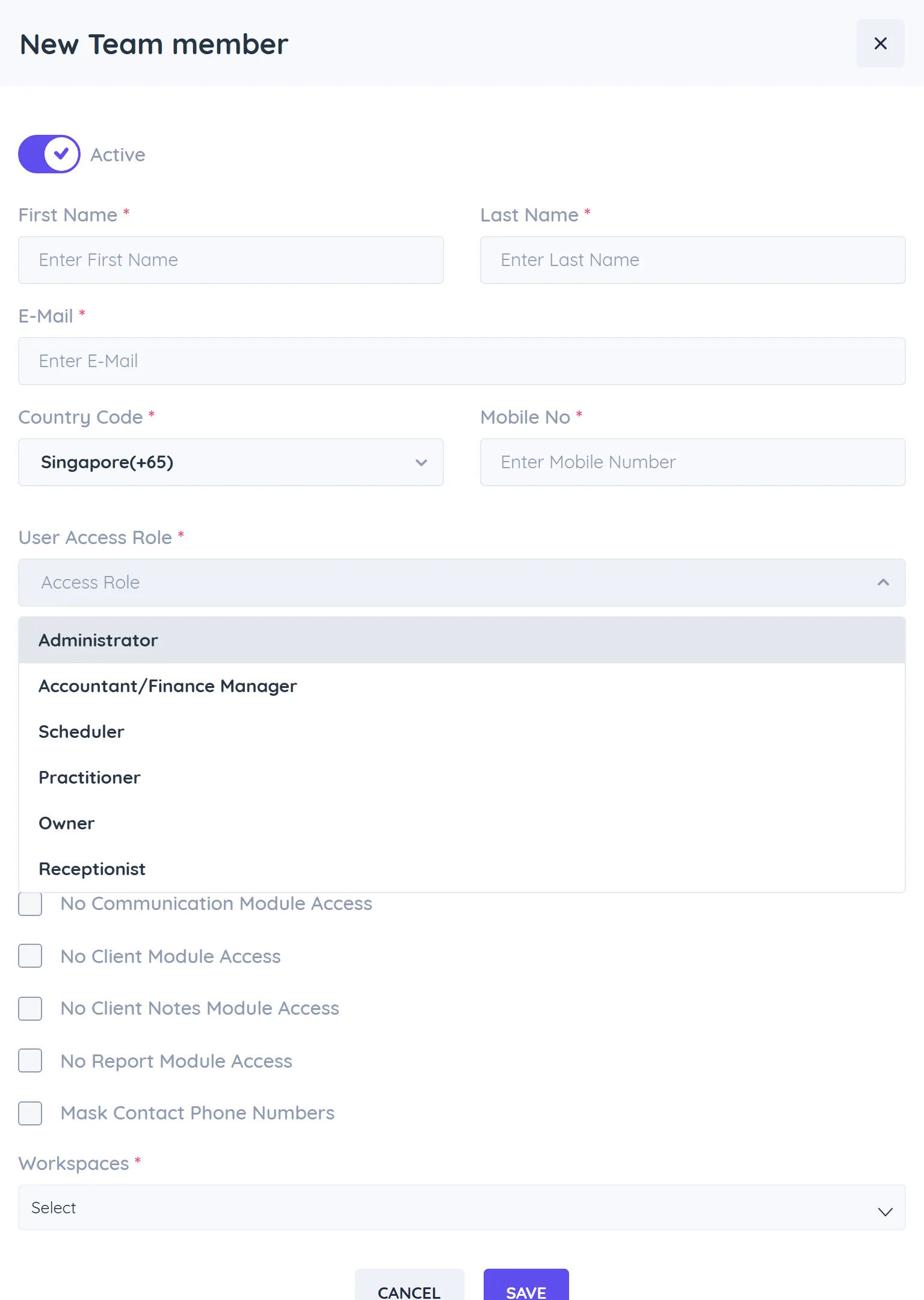
Granular access
Below the role, the team member form has these checkboxes. Ticking one takes that access away from this member only.
| Option | What it does |
|---|---|
| Internal Staff/Not Available for Appointments | The member does not take bookings and is not offered to clients. Always on for Receptionist, Scheduler and Accountant/Finance Manager. |
| No Application Access | The member cannot log in at all and no invitation is sent. Use it for people who only need to appear on the calendar. Ticks all the options below. |
| No Finance Module Access | Hides Finance (payments, orders, subscriptions, invoices, statements, expenses), the Invoices report and revenue on the dashboard. Always on for Scheduler. |
| No Catalogue Module Access | Hides the Catalogue (services, classes, products, plans). Always on for Scheduler. |
| No Communication Module Access | Hides the Inbox and Engage (contacts, segments, broadcasts, automations, templates) and the Communications report. Forms & Flows moves under Settings. Always on for Accountant/Finance Manager. |
| No Client Module Access | Hides Clients. Also ticks No Client Notes Module Access. Always on for Accountant/Finance Manager. |
| No Client Notes Module Access | Hides client notes while keeping the rest of the client record. |
| No Report Module Access | Hides Reports. Only Owner, Administrator and Accountant/Finance Manager can see reports at all, so for other roles it is always ticked. |
| Mask Contact Phone Numbers | Shows phone numbers partly hidden in lists, reports and exports, so the member can message people without copying their numbers. |
Options that a role always includes are greyed out.
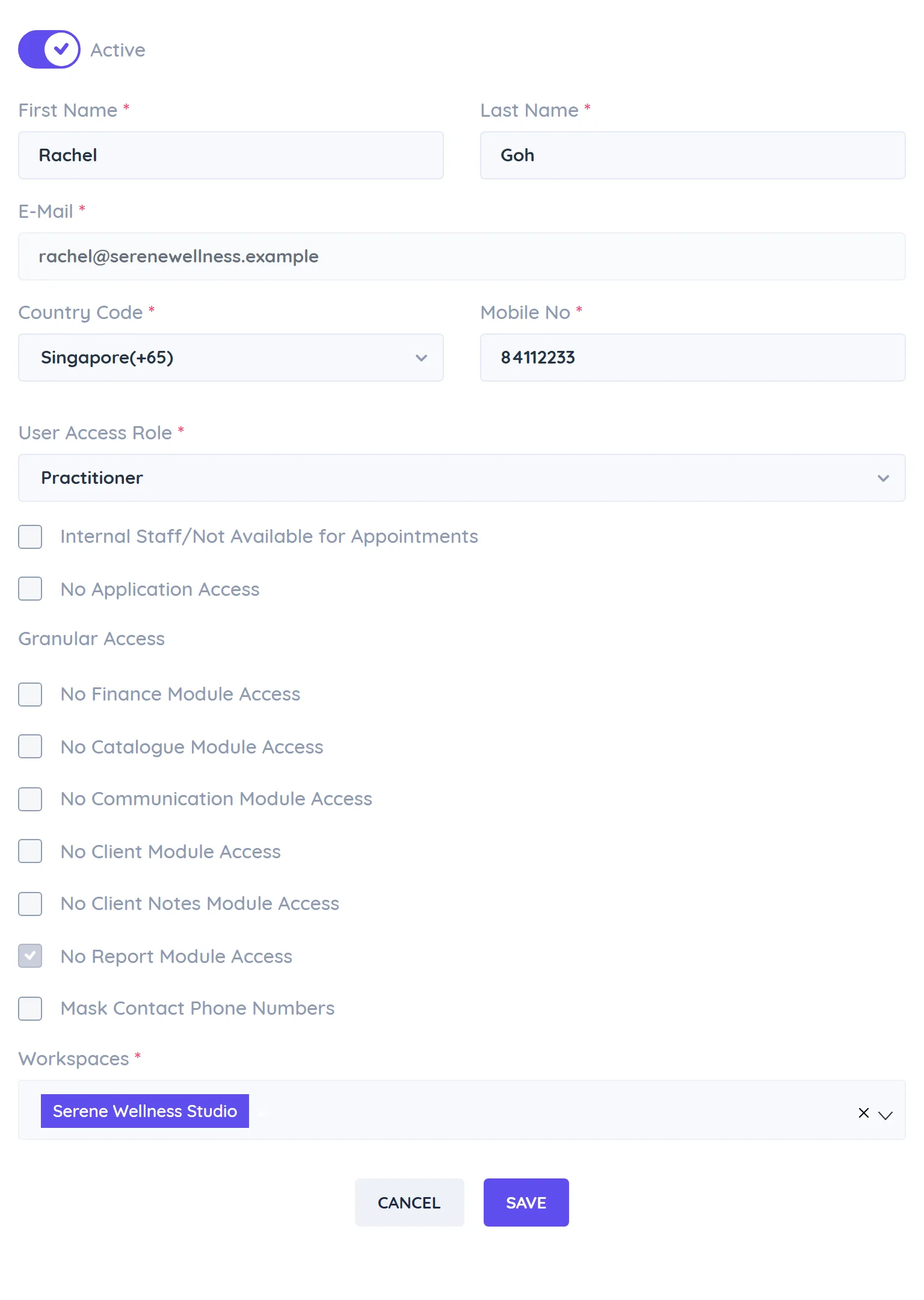
Change a team member's role or access
- Go to Settings > Team Members.
- Click Edit Team Member (the pencil) next to the member.
- Change the User Access Role or tick and untick the access options.
- Click Save. You see Team member updated successfully.
The change applies the next time the member loads the app. Their sidebar goes back to the default order, because the menu they see has changed.
Tips
- Give the Administrator role only to people you trust with billing and team changes.
- Use Accountant/Finance Manager for an outside bookkeeper: they see invoices and reports but not your conversations or client records.
- To see who changed what, open the Activity Log.